

HVAC Business Software: What to Look For (And What to Ignore)
There are dozens of options, and most are built for someone else's business. Here's how to cut through the noise and find what actually works for HVAC contractors.
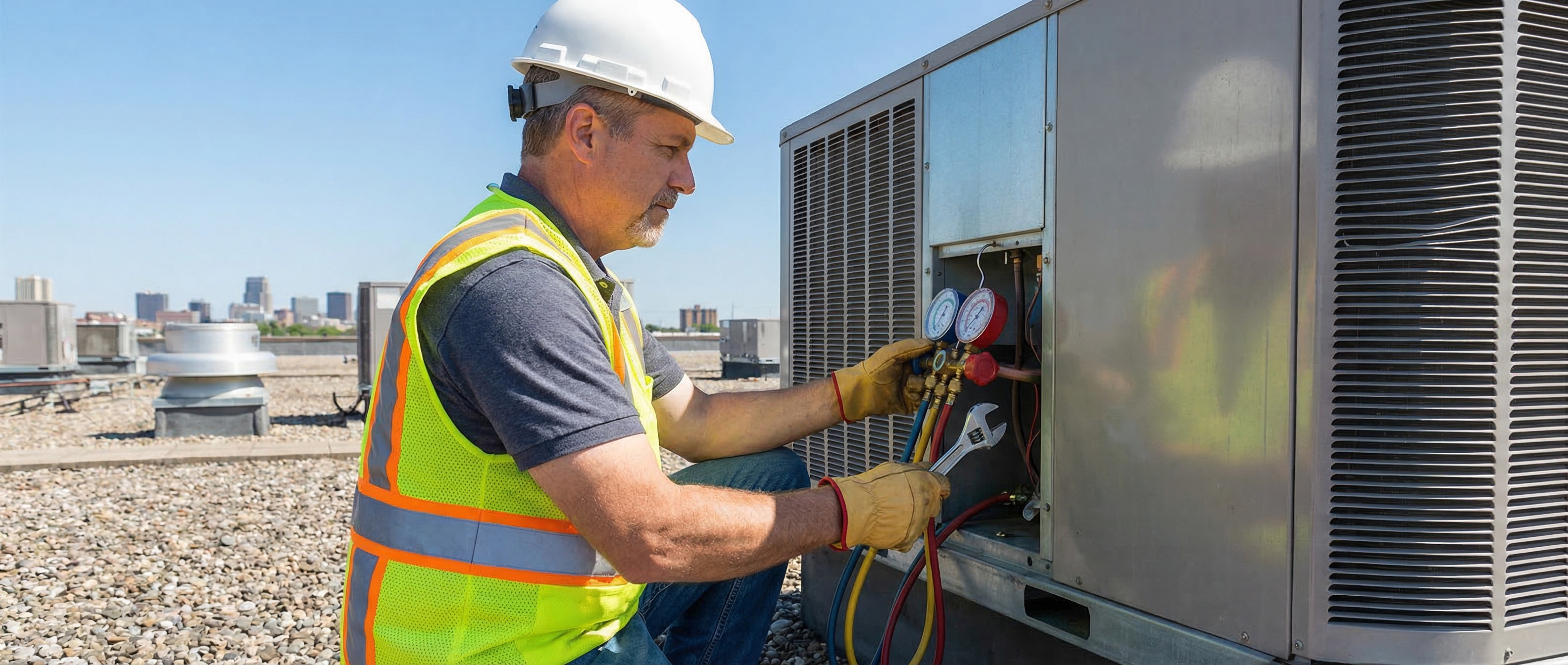
If you've ever tried to research HVAC software, you know what happens. You search, you get a list of 20 options, half of them look identical, and every single one claims to be 'the best solution for HVAC businesses.' None of them tell you what actually matters.
I've talked to a lot of HVAC contractors. The ones who made good software decisions share one thing in common: they stopped shopping for features and started asking what actually breaks down in their operation.
So that's where we'll start.
The Problems Worth Solving
Most HVAC contractors struggle with the same handful of things. Dispatch chaos, who's going where, which van has the right parts, why a tech showed up without the capacitor they needed. Job documentation, proving what was done, protecting yourself when a client says the problem was there before you touched it. Time tracking, knowing actual labor hours per job so you can price future jobs right.
And then there's the back office stuff: invoicing that actually gets sent, quotes that don't take 45 minutes to put together, customer history you can pull up in 10 seconds when someone calls.
If software doesn't address at least three of those, it's not solving your real problems. It's just giving you another app to manage.
What to Actually Look For
Mobile-first, not mobile-friendly. There's a difference. Mobile-friendly means someone took a desktop app and squished it onto a phone screen. Mobile-first means the whole thing was designed for a tech standing in a crawlspace with gloves on. Your field guys aren't sitting at a desk. Their app shouldn't feel like they are.
Offline capability. HVAC techs work in basements, utility rooms, and buildings with no cell service. If your software requires a connection to function, it fails exactly when your guys need it most. Any software you buy should work offline and sync when a connection comes back.
Photo documentation. Before-and-after photos tied directly to a job are your best protection. A client claiming the unit was already damaged? You have timestamped photos. A warranty dispute? Same. This isn't a nice-to-have anymore. It's standard.
GPS time tracking. Not because you don't trust your guys. Because you need accurate data to run the business. When you know exactly how long jobs take, you can price better, schedule tighter, and catch scope creep before it eats your margin.
Simple invoicing. The job ends, the invoice goes out. That's how it should work. If your software requires three screens and a CSV export before you can invoice, your techs are either doing it wrong or not doing it at all.
What You Can Safely Ignore
Enterprise dashboards with 40 metrics nobody reads. AI features that don't connect to your actual workflow. Deep CRM integrations if you're running a crew of 5. Inventory management systems that require a dedicated person to maintain.
The software industry loves to sell complexity as a feature. For a small or mid-sized HVAC operation, complexity is the enemy. You don't need a platform that does everything. You need one that does the right things well.
Questions to Ask Before You Buy
Can my techs learn this in under an hour? If the answer isn't yes, adoption will be a fight. The best software in the world doesn't help if your guys work around it.
Does it work offline? Ask specifically. Don't let 'mobile app' be the answer.
How does invoicing work from the field? Watch them demo it. If it takes more than a minute, it won't get done on site.
What does support look like? Email-only support with a 48-hour response time is a problem when your dispatch is broken on a Monday morning in January.
The Bottom Line
Good HVAC software doesn't feel like software. It feels like having one less thing to think about. Your guys clock in, document the work, the invoice goes out, and you have a record of everything without chasing anyone down.
Start with the problems. Find the tool that solves them cleanly. Ignore everything else.