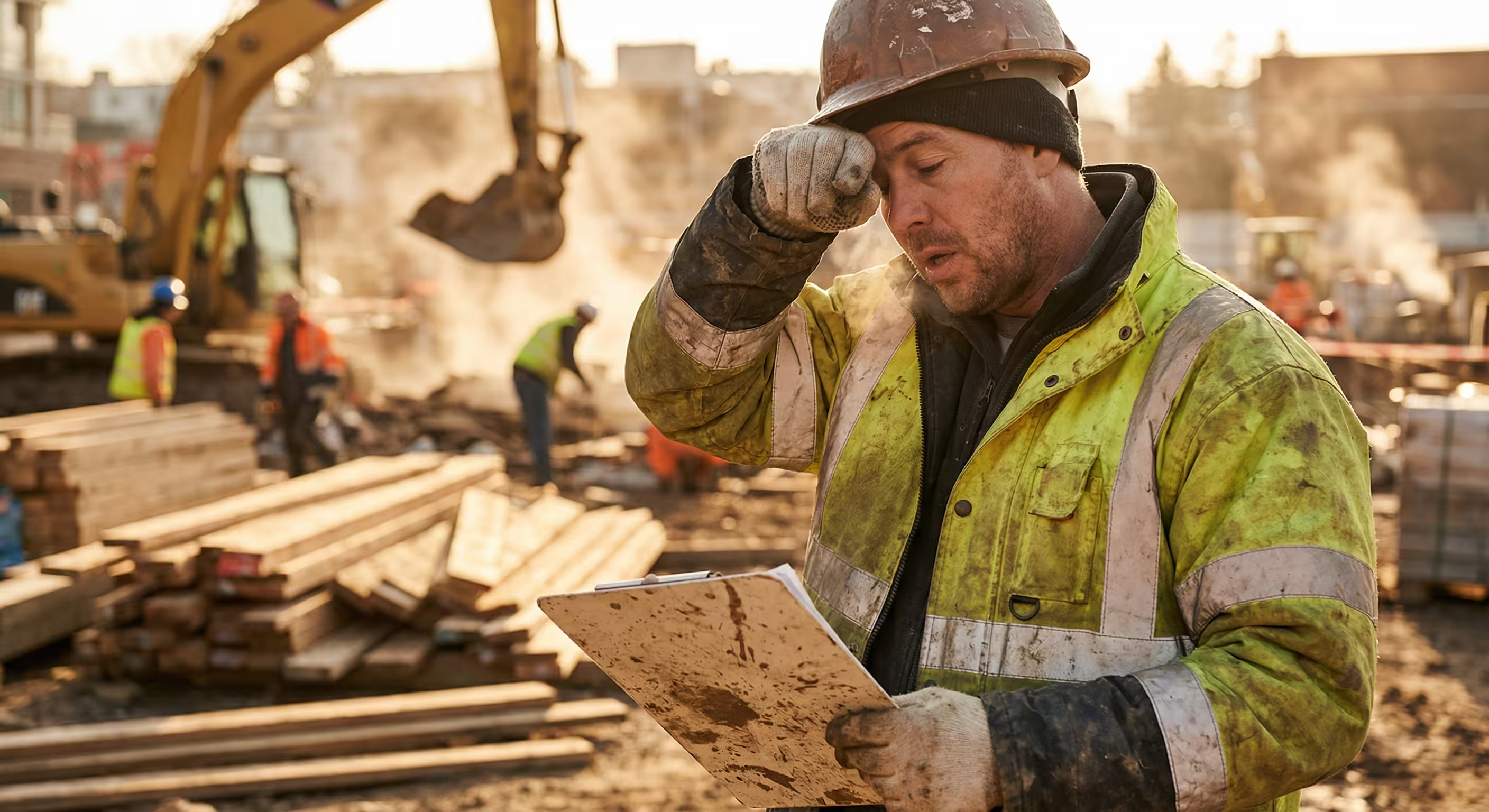

Construction Photo Documentation: How to Protect Yourself from Disputes
One photo from the right moment can save you thousands in disputes and insurance claims. Here's how to build photo documentation habits your crew will follow.
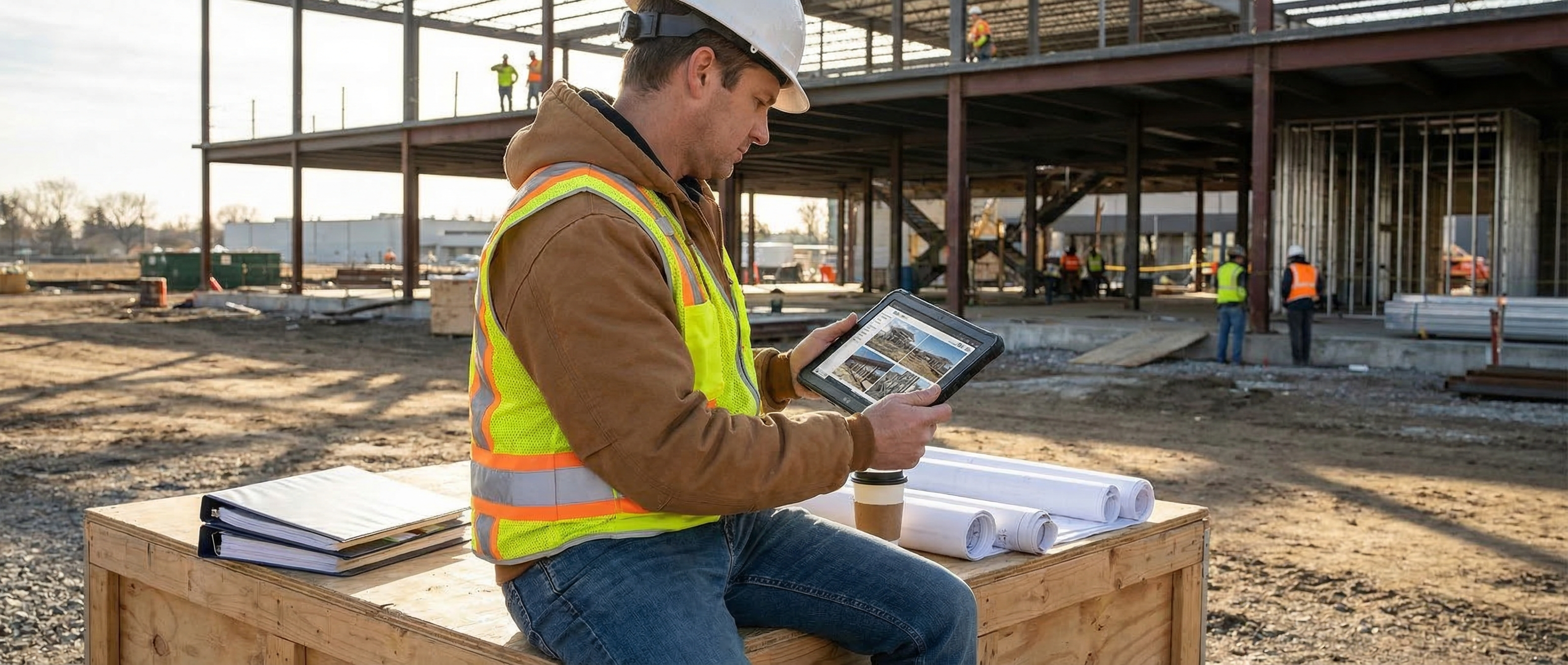
I got a call three weeks after finishing a bathroom reno. Client said we cracked their hardwood floor moving materials through the hallway. Wanted $2,800 to replace it.
Thing is, that crack was there when we showed up. I remembered seeing it. My guy remembered seeing it. But we had nothing: no photo, no note, nothing we could put in front of a client and say here, look.
We ended up splitting the cost just to make it go away. $1,400 out of pocket on a job we did perfectly.
That was the last time I showed up to a job without a camera.
The Photos You Need Before You Touch Anything
Pre-existing damage is where contractors get burned the most. A scratch on a baseboard. A crack in drywall. A stain on carpet. It was there before you. But if you don't document it, it might as well not have been.
Do a full walkthrough on day one. Photograph every room you're working in, every surface you'll be near, every area you'll be hauling materials through. Take more than you think you need. Storage is free. Disputes are not.
Look specifically for: existing cracks, water damage, stains, worn edges, anything that's already damaged or worn. These are the things that will come back to haunt you.
The Shots That Actually Protect You
Rough-in before you close it up. Once drywall goes on, nobody can see what's behind it. If there's ever a leak, a mold issue, or a question about how something was done, that rough-in photo is your proof. Take it every time, on every job.
Completed work at the end of each day. Not just when the job is done. At the end of each day. If something changes overnight (weather, vandalism, another trade coming through), you have a record of the state you left things in.
Material deliveries. What was delivered, what condition it was in, where it was staged. If material goes missing or gets damaged before it's installed, you need that record.
Anything unusual. Found knob-and-tube wiring behind the wall? Rotted framing? Asbestos tile under the flooring? Photograph it immediately, before you touch it, and call the client. This is the stuff that leads to disputes if it's not properly documented.
Why Most Contractors Don't Do This
It's not laziness. It's that nobody builds the habit into their workflow. It's not a scheduled thing. It's not part of how jobs get started. So it doesn't happen until the first time you really need it and don't have it.
The other problem is organization. Even guys who take photos end up with 400 images in their phone's camera roll that are impossible to find six months later when a dispute comes up. A photo buried in your gallery does you about as much good as no photo.
Build a System That Actually Works
It doesn't have to be complicated. What it has to be is consistent.
Tie photos to the job, not to your phone. If photos live in a dedicated job file (alongside the estimate, the change orders, the client communications), you can find them when you need them. If they're in your general camera roll, good luck.
Timestamp everything. The timestamp is your proof. A photo without a timestamp is a photo. A photo with a timestamp is evidence. Make sure your system records when and where photos were taken.
Make it part of the job start checklist. Before any work starts: walkthrough photos. Before any walls close: rough-in photos. At job completion: final photos. These are non-negotiables, not optional extras.
The $1,400 I paid out on that bathroom was the best business education I ever got. The lesson wasn't complicated: document everything before you touch it. The contractors who do this don't win disputes because they're lucky. They win because they prepared.