
The Insulation Contractor's Guide to Running a Tighter Operation
How insulation contractors are using AI takeoffs, GPS crew tracking, and digital estimates to quote faster, protect every install, and get paid without the paperwork.

Insulation contracting has a documentation problem that most trades don't have. You do the work, it gets covered up, and then it's gone. Drywall goes up. Flooring gets laid. Siding gets installed. And whatever you put in those walls — the type, the R-value, the coverage, the quality of the install — is invisible forever.
That's fine when everything goes well. But when a homeowner calls six months later saying their energy bills are too high, or a GC questions your hours, or an inspector wants to know what was used in a specific zone — you better have something to show them.
The Three Problems Most Insulation Contractors Have
Estimates take too long. Every insulation job is different. Different materials, different zones, different access conditions. You can't use a generic template. So you end up doing it manually — building the quote in Excel, doing the math yourself, sending a PDF, and then waiting. And then re-sending. And sometimes, by the time the customer gets back to you, they've already hired someone else.
Crew time is hard to track accurately. Your guys are in attics, crawl spaces, mechanical rooms. They're on new construction sites where there's no cell signal. Paper timesheets filled out on Friday afternoon from memory are not accurate. They're guesses. And when a GC disputes your invoice or a worker claims they weren't paid fairly, you have nothing solid to stand on.
There's no record of what was installed. Before the drywall goes up, nobody takes photos. Nobody logs the zone coverage. Nobody documents the R-value per area. And then when a question comes up — from a homeowner, an inspector, an insurance adjuster — the answer is always the same: "I think it was..." or "We usually put in..."
AI Takeoffs: Upload the Blueprint, Get the Estimate
The fastest shift most insulation contractors can make right now is letting AI do the measuring. Upload the floor plan to JODA — JobBuddy's AI assistant — and ask it to calculate the square footage per zone. It reads the drawing, measures each area, and returns the numbers. No scaling by hand, no room-by-room calculator work.
Then JODA builds the estimate using your actual product catalog and pricing. Your blown-in rate, your spray foam rate, your vapour barrier — all of it already loaded. JODA pulls the right materials for the right zones, applies your pricing, and drafts the line items. You review, adjust if needed, and send.
A job that used to take two hours to quote now takes fifteen minutes. The margin for error drops because you're not doing the math yourself. And the estimate reflects your real pricing — not a ballpark, not a guess.
When a homeowner gets three quotes and yours arrives the same day with a clean itemized breakdown, you win before the price is even compared. Speed is a closer.
Instead of emailing a PDF, you send a link. The customer opens it on their phone, reviews the breakdown, and signs digitally. You get notified the second they approve. The approved estimate converts to an invoice in one click — no re-entering anything. Request a deposit before your crew shows up.
Tracking Time When Your Crew Has No Signal
GPS time tracking sounds simple until you realize that half of insulation work happens in places where GPS and cell signal don't exist. Attics. Crawl spaces. Basements. Rural builds with no towers nearby.
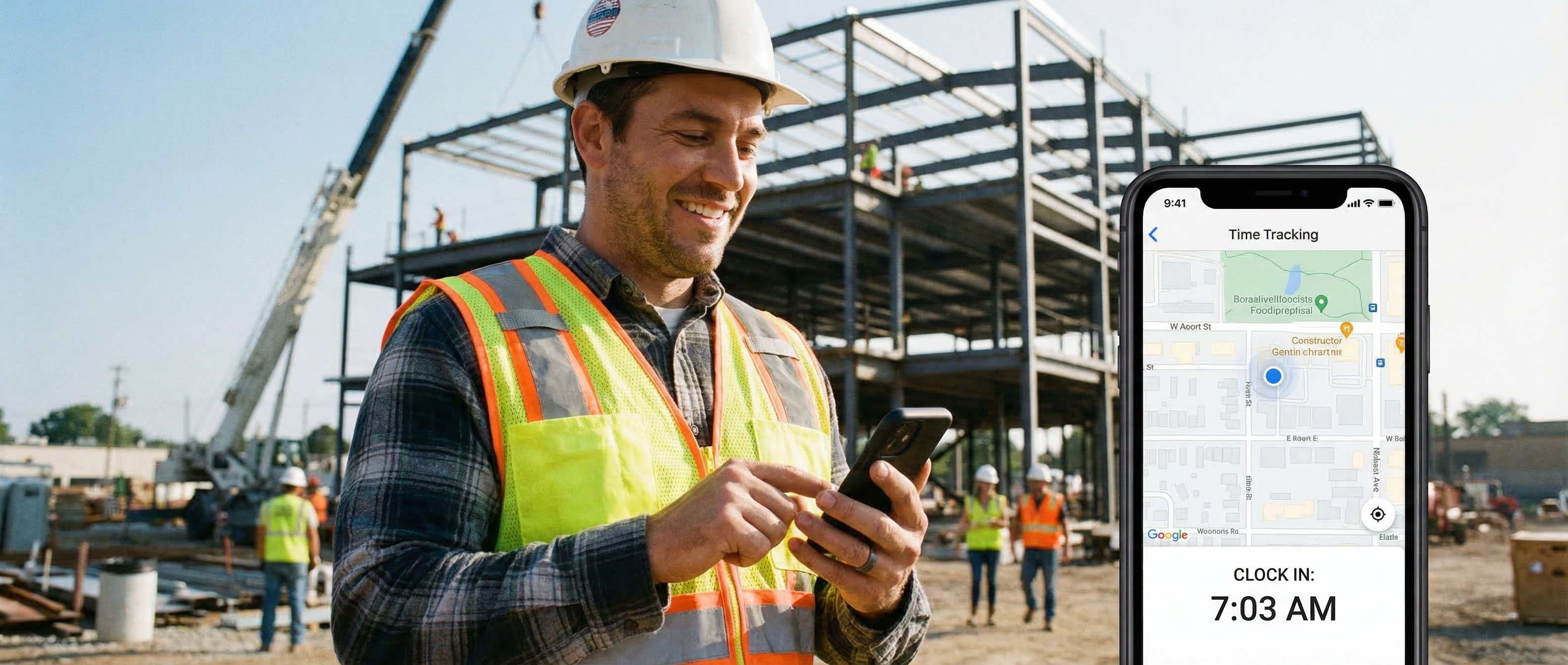
The fix isn't better signal — it's an app that works offline. Your crew clocks in when they arrive at the job site. That clock-in captures their GPS coordinates and timestamp. If they're underground or in an attic, the data gets stored locally on their phone and syncs the moment they step outside. You get the accurate data. They don't have to think about it.
Geofencing adds another layer. You set a boundary around the job site. When your crew clocks in from a location that isn't the job site, the system flags it. Not to play gotcha — but because accurate time data is the foundation of accurate payroll and accurate invoicing.
When a GC questions your hours on a three-week job, you pull up the GPS-verified time log. Exact arrival and departure times for every crew member, every day, with location data. The conversation ends there.
Documenting What Nobody Can See
The insulation install documentation habit takes about five minutes per job to build. Before your crew starts, take photos of each zone — the framing, the existing conditions, any problem areas. After the install, photo every zone again. Type of insulation, coverage, any notes about unusual conditions.
Those photos need to be linked to the job automatically, not saved in someone's camera roll. GPS-tagged, timestamped, and organized under the customer and address. Searchable by job, by material type, by date, by crew member.
When a homeowner calls a year later with a concern, you open the job, pull up the photos, and show them exactly what was installed and where. Most of the time, that call ends in two minutes instead of becoming a dispute.
When you're bidding on a similar job and want to reference what you used last time, the record is there.
What Tight Operations Actually Look Like
The insulation contractors who run efficiently aren't doing anything exotic. They've just eliminated the manual steps that everyone else still does out of habit.
They quote from a catalog instead of from scratch. They send links instead of PDFs. They collect signatures digitally instead of chasing paper. They clock in at the site with GPS instead of trusting memory. They take photos before the drywall goes up instead of hoping nobody asks.
None of it is complicated. The tools exist. The question is whether you're using them.